
Published: April 17, 2020 Updated: May 17, 2023 Author: Dr. Simon J Pierce
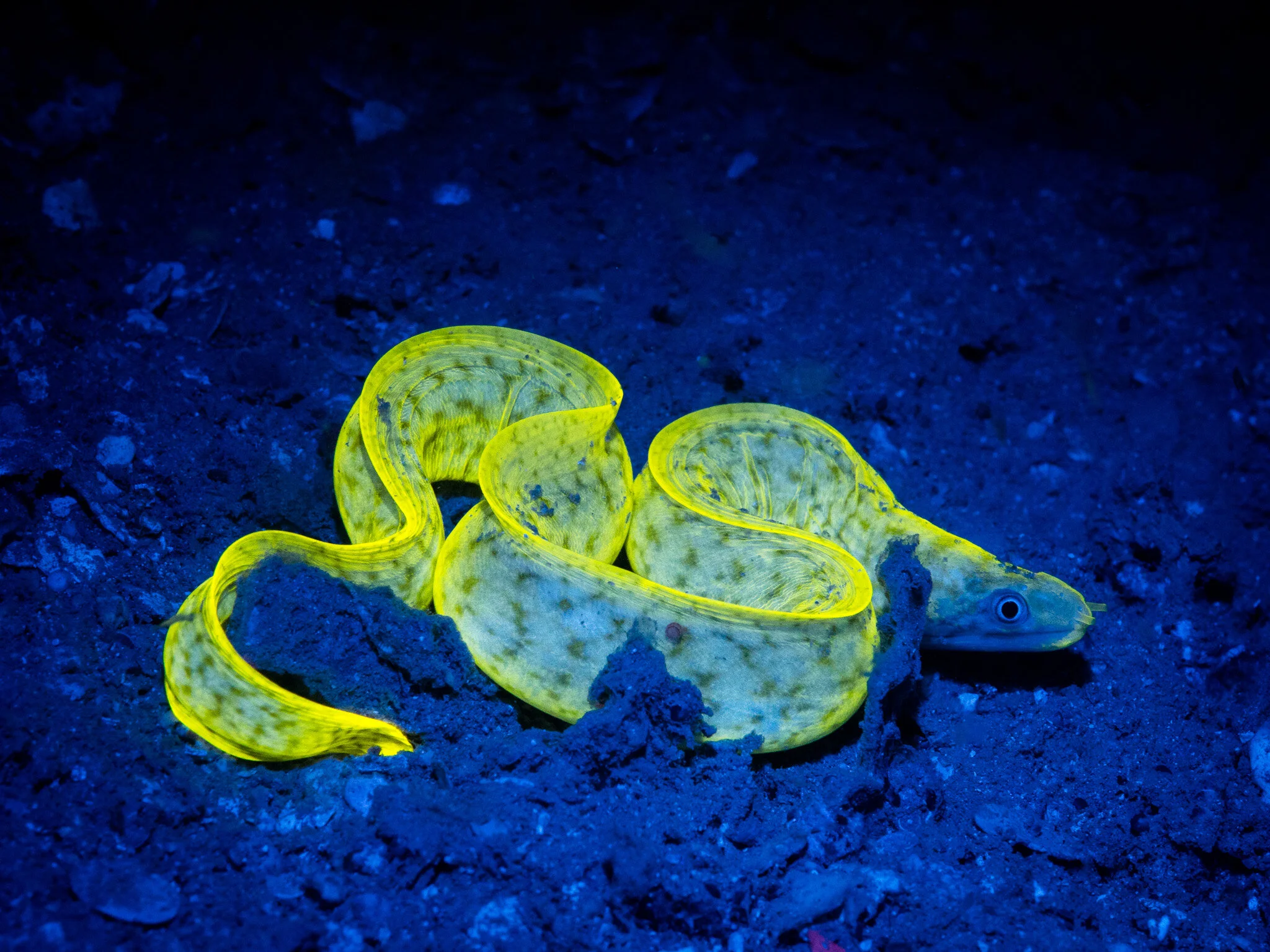
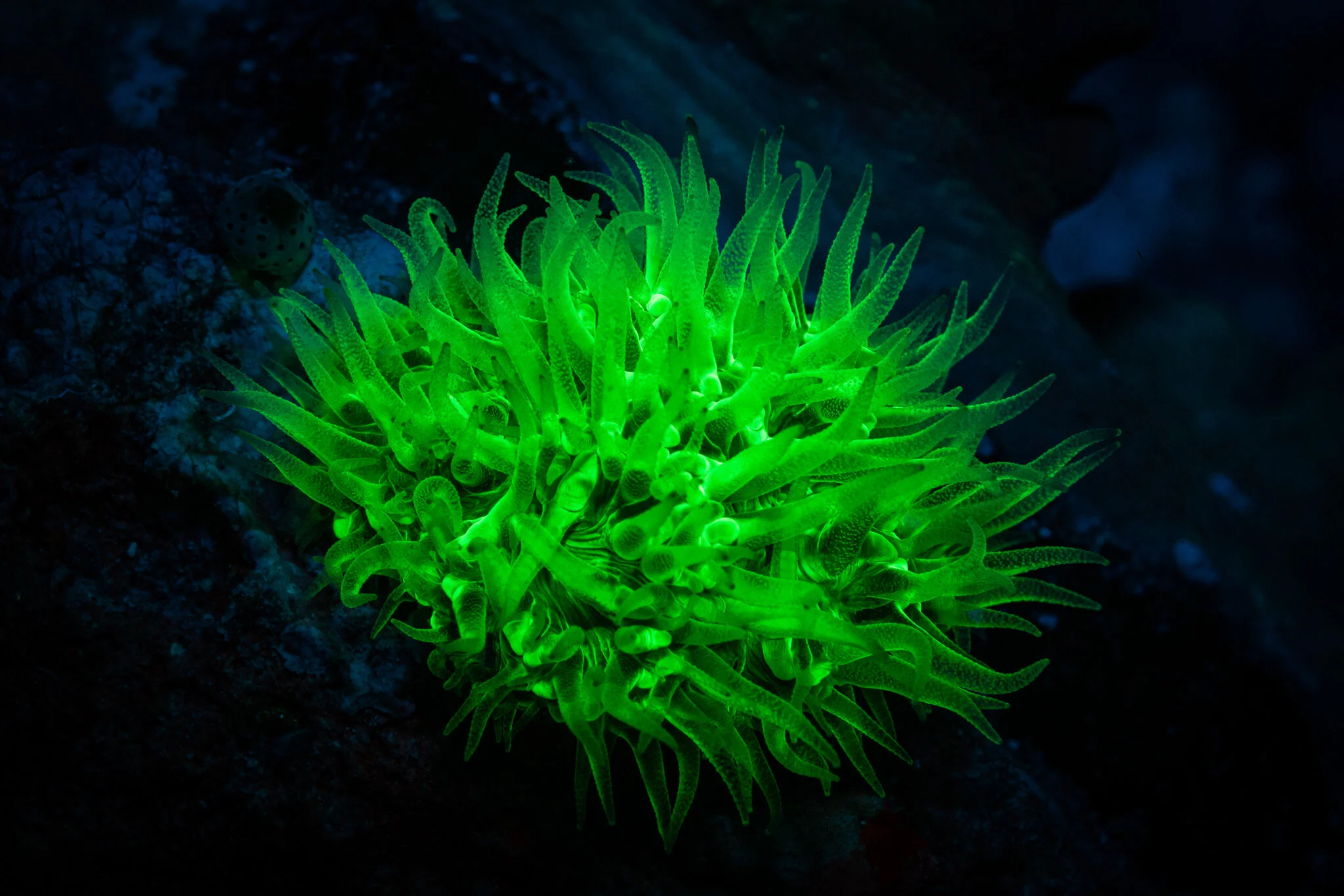
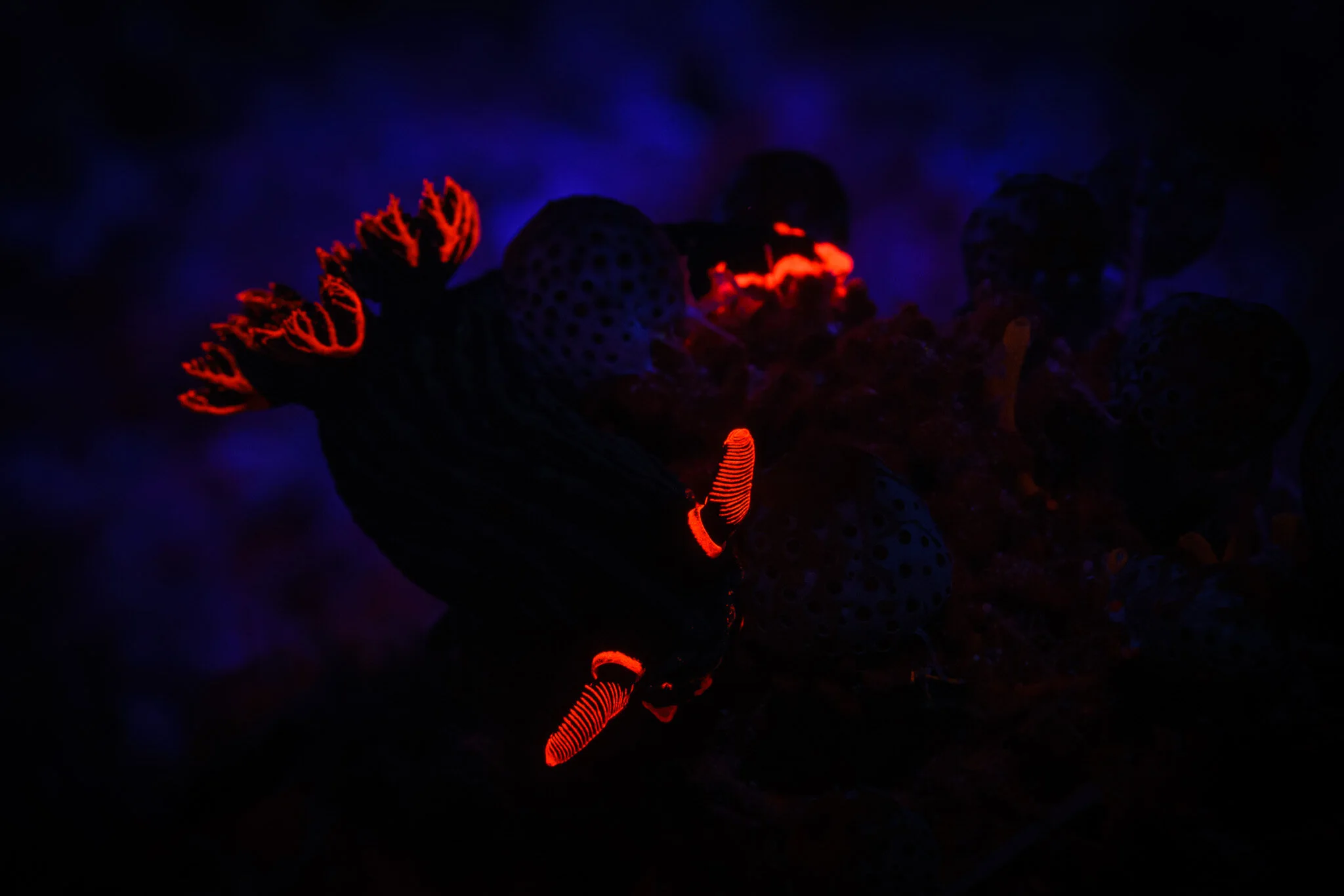
Underwater fluorescence photography is an extension of already-challenging underwater macro work. My first experience in 2016 at Nosy Sakatia, Madagascar, witnessing neon-colored marine life and fluorescent corals was intoxicating.
What Gear Do You Need?
Essential Equipment:
- Blue light source for activating fluorescence (mounted to housing or strobe arm)
- Yellow barrier mask filter to remove blue light and reveal fluorescent emissions
- Dichroic excitation filter for the strobe
- Yellow port filter to cut blue light during photography
I use a Cressi Big Eyes Evolution mask with a custom yellow filter from Fire Dive Gear. My strobe configuration includes a Sea & Sea YS-D2J with dichroic filter.
Budget-Friendly Alternatives:
- Olympus TG-6 with Ikelite kit (the easiest underwater photography fluorescence kit)
- GoPro with fluorescence filter kit from Backscatter
Camera Settings
Starting configuration:
- Shutter: 1/80 second
- Aperture: f/14
- ISO: 1600
- Strobe: Full power
Manual focus is essential due to low-light challenges. I use red peaking at High sensitivity with manual focus gear on the Nauticam housing.
Practical Tips
Key Recommendations:
- Maintain excellent buoyancy to avoid reef damage in low-visibility conditions
- Search sand areas rather than densely populated reefs for better subject isolation
- Move slowly and methodically across the substrate
- Expect variation: cryptic fish fluoresce well, but large morays and pelagics typically don’t
- Conduct white-light dives alongside fluorescence dives, as many interesting species don’t fluoresce
Fluorescence diving over full coral reefs resembles watching the night scene in Avatar but produces challenging photographic conditions.
Source: naturetripper.com/articles/underwater-fluorescence-photography