
Published: September 5, 2022 Updated: September 6, 2022 Author: Simon Pierce
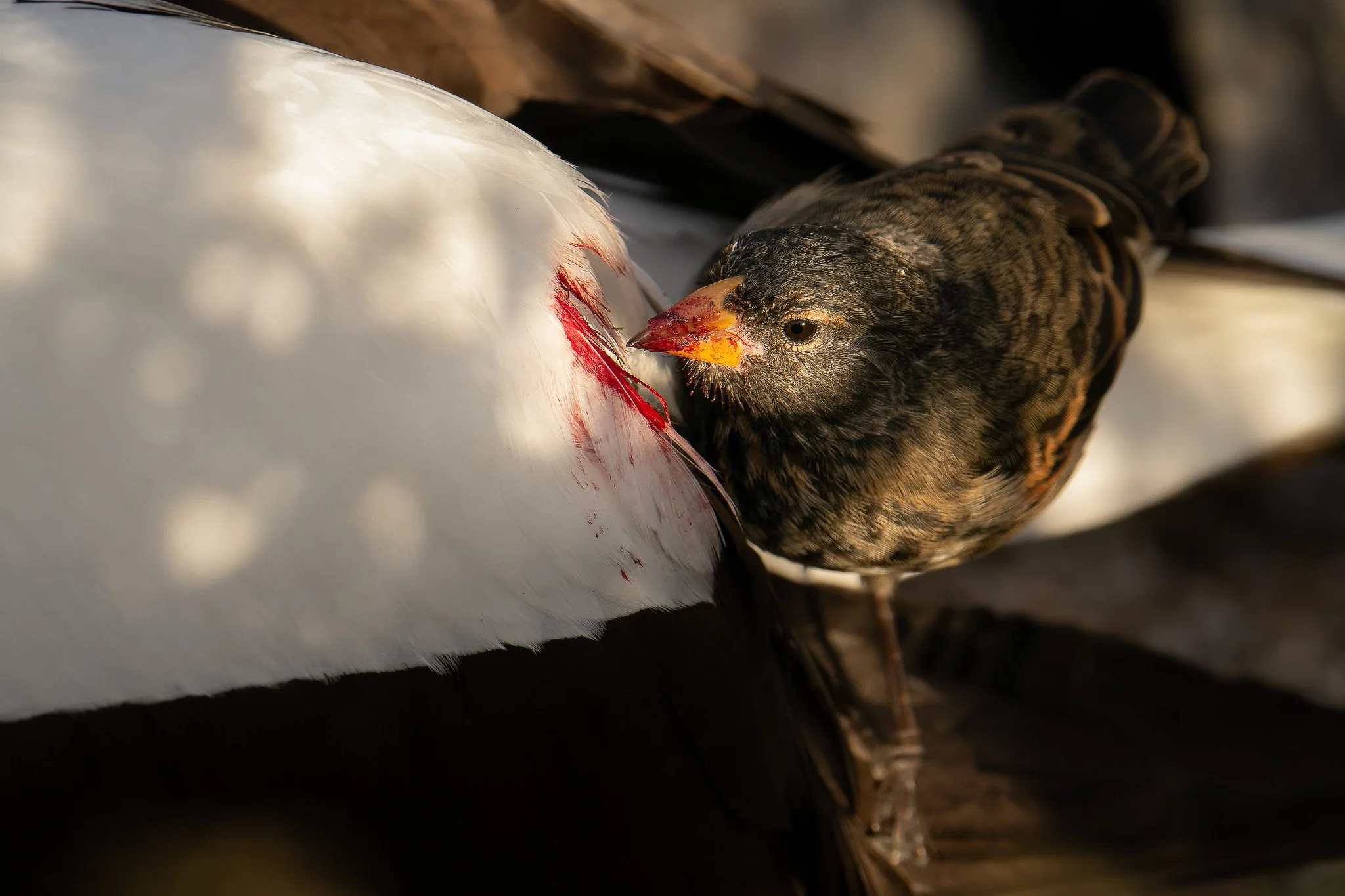
The Galapagos Islands are renowned as a crucible for evolution. Famously, an ancestral tanager species, following its arrival from South America about 1.5 million years ago, radiated and adapted to the varying environmental conditions available on the different islands. Eighteen species of “Darwin’s Finches” (they’re not actually true finches) are now found through the Galapagos archipelago, while a 19th is found on Cocos Island off Costa Rica.
On Santa Cruz and San Cristobal islands, where most people start their Galapagos journey, these birds are small, common, and friendly.
These islands, though, are large, forested, and have permanent water sources.
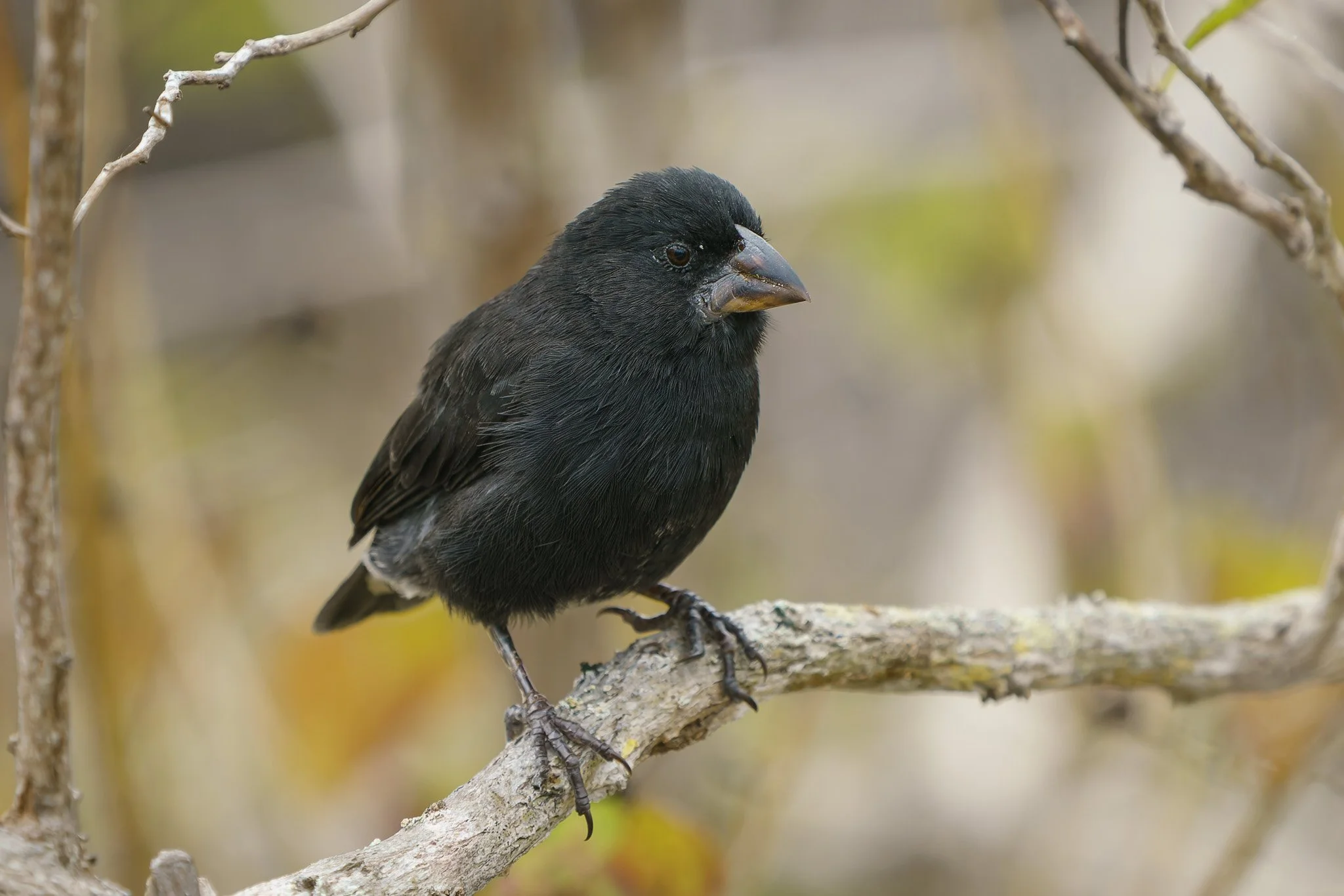
Wolf Island, in the far north of the archipelago, is a very different place. Wolf lies 140 km north of the main islands, created by a different volcanic system. It’s small, less than 3 square km in size. The island is closed to visitors, and rarely visited even by park staff or scientists.
On this remote volcano, these cute little birds have changed. These finches have evolved. These finches… dramatic pause… are vampires.
Introducing the Vampire Finch
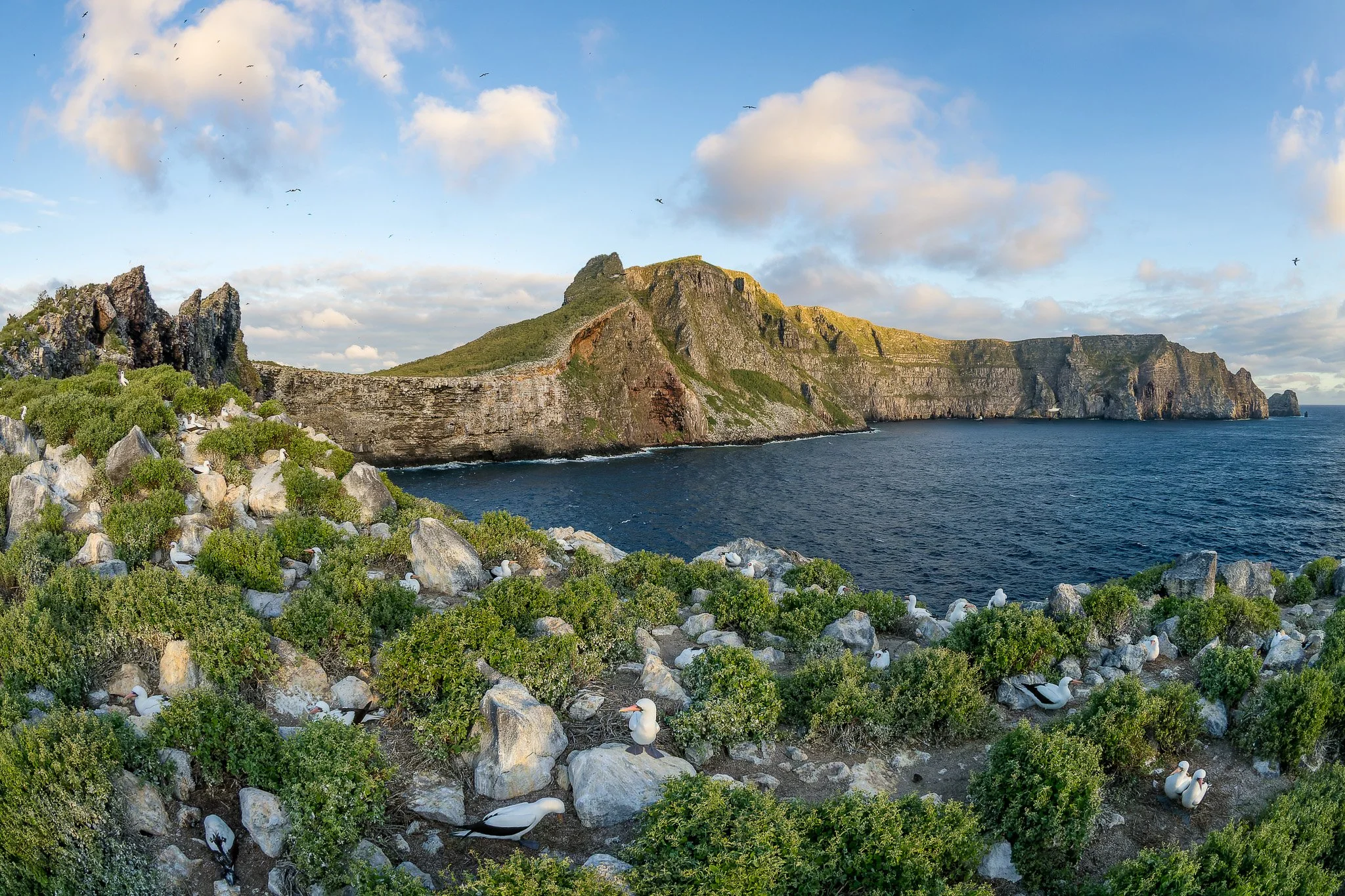
I know, I know, vampires are so 2008. These little bloodsuckers have been around somewhat longer. Their ancestor, possibly the contemporary large ground finch, arrived on Wolf about 250,000 years ago. A lack of natural water sources means the island is extremely dry for most of the year.
The best, most reliable source of fluid? Blood.
Nazca boobies nest in abundance on the island, their permanently quizzical countenance greeting us in the hundreds upon arrival. The finches flit among them, occasionally landing on their folded wings, whereupon they use that sharp beak to find and pull out the developing feathers.
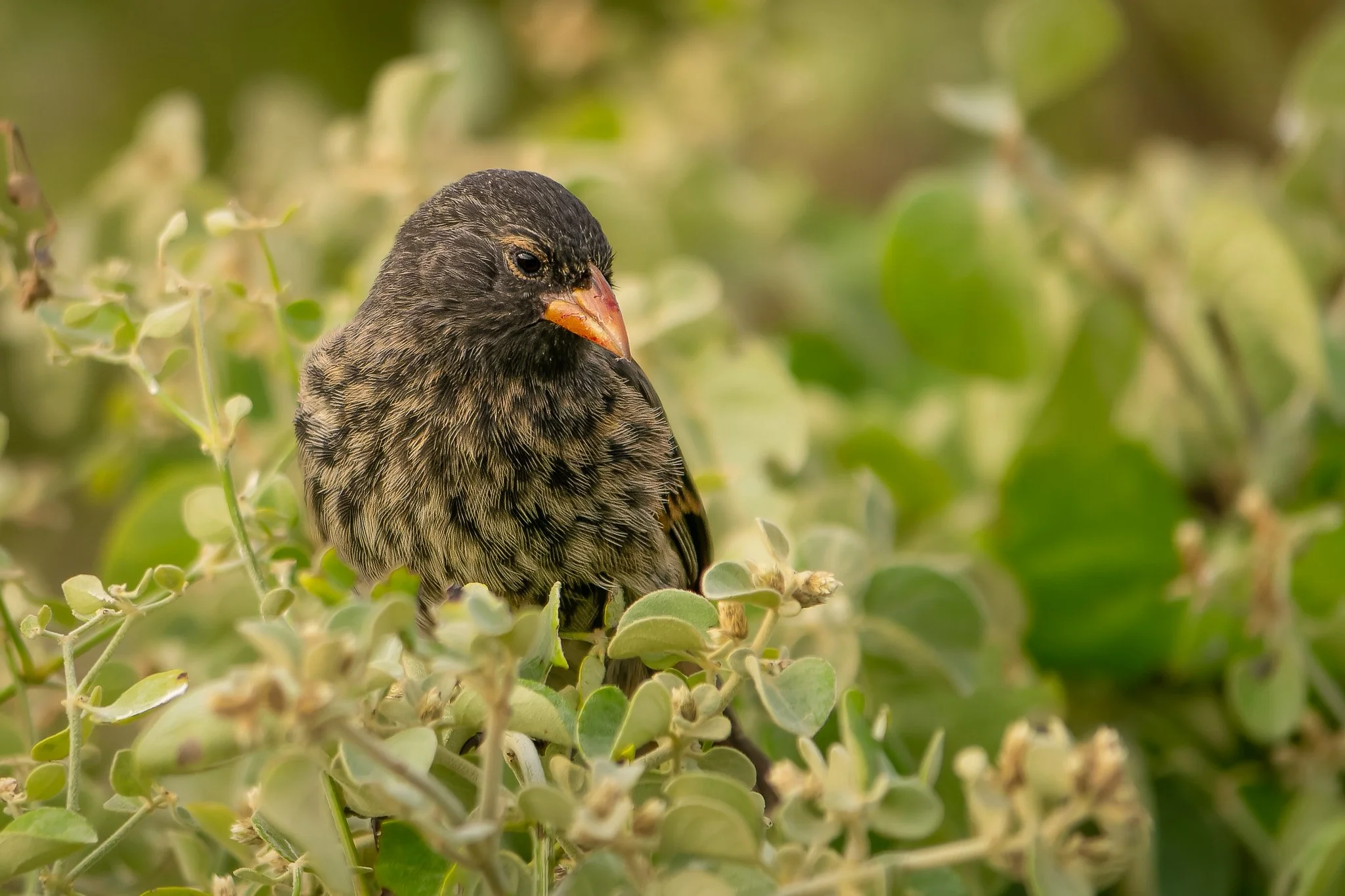
The blood flows freely from the wound, staining the boobies white plumage. Multiple finches were sometimes taking turns to lap it up.
This blood-drinking behavior is thought to have evolved from the finches pecking out parasites. It looks macabre, to put it lightly, but the boobies didn’t seem overly troubled. They barely seemed to notice the finches.
The photos above were taken on a specially-permitted photographic trip, way back in 2014, that allowed us to land on Wolf Island. It was amazing. I thought that’d be my only opportunity to see the vampire finches – but I’ve just returned from the Galapagos, and I was able to view these good birds gone bad once again!
On a Galapagos Shark Diving liveaboard trip, we took a break between dives at Wolf (which is also one of the world’s best dive destinations) to go on a short wildlife-spotting cruise. I was hoping to see some more vampire finches, and… jackpot!
The vampire finches are still there, and it’s still all very gross… interesting. I got some shots with my 100–400 mm – I was very happy I decided to take it along for the ride – and Mads got a quick video with the phone (below).
The uniquely weird animals of the Galapagos have fascinated me ever since I first heard about marine iguanas – yeah, lizards that eat seaweed and snort the excess salt out of their noses, cool and normal – and these little vampire finches have definitely been added to that list. The harsh terrestrial environment of the islands has led to some crazy adaptations among the animals that call it home.
Simon.
Learn More
- Vampire finches: how little birds in the Galápagos evolved to drink blood.
- Evolution of Darwin’s finches and their beaks revealed by genome sequencing.
- The gut of the finch: uniqueness of the gut microbiome of the Galápagos vampire finch.
- Vampire ground-finch (IUCN Red List Assessment).