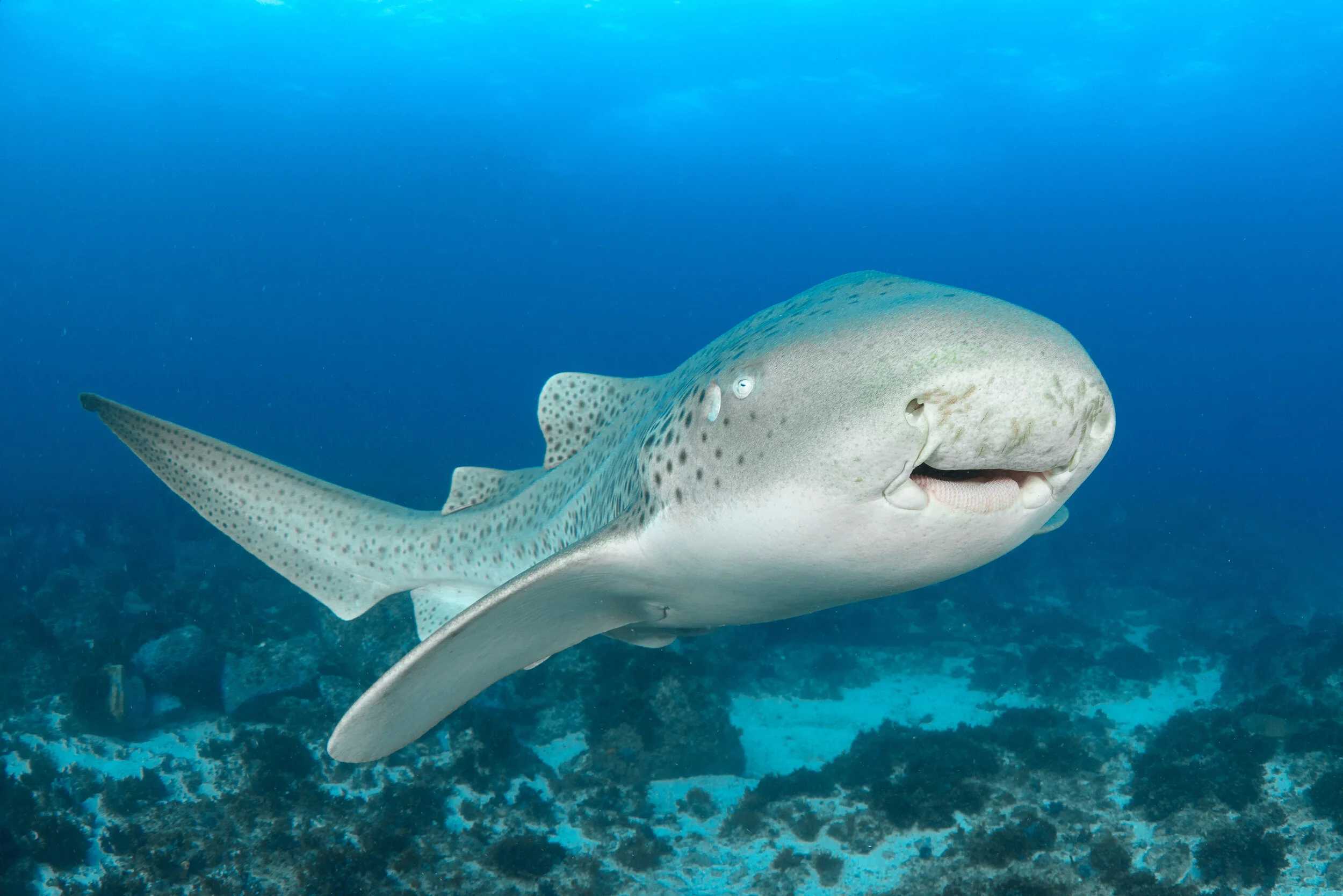
Diving in Byron Bay, Australia: The World's Best Temperate Shark Dive?
Author: Dr. Simon J Pierce
Published: September 9, 2022 | Modified: May 17, 2023
Categories: Travel, Australia, Underwater
Julian Rocks Nguthungulli Nature Reserve, just off the famed beaches of Byron Bay, is “one of Australia’s – and the world’s – best shark dives.” The site features over 1,000 marine species visiting the area annually.
Where are Julian Rocks, Byron Bay?
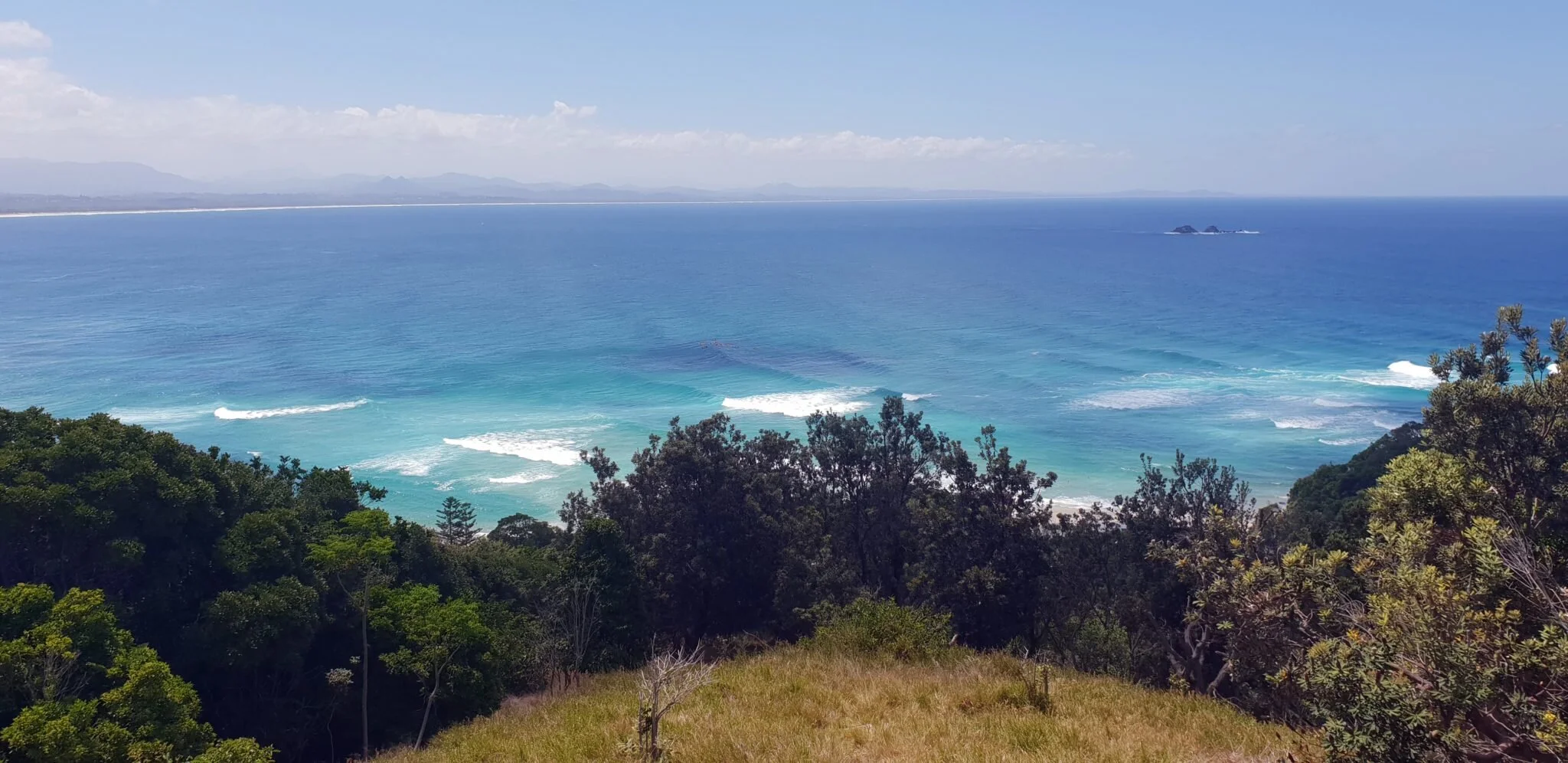
Julian Rocks are a pair of rocky outcrops named Juan and Julia, located 2.5 km off Byron Bay’s main beach in northern New South Wales—Australia’s easternmost point. Juan reaches 19 meters in height. Despite Byron Bay’s popularity as a beach tourism destination, the dive site remains relatively uncrowded.
Why is there so much marine life?
The subtropical location represents a convergence zone where warm-water tropical species like ornate ghost pipefish and reef manta rays meet cooler-water residents like grey nurse sharks. The area serves as a transit corridor for migratory species while hosting hundreds of resident species, including 100+ nudibranch species and over 20 shark and ray species.
The Sharks of Julian Rocks
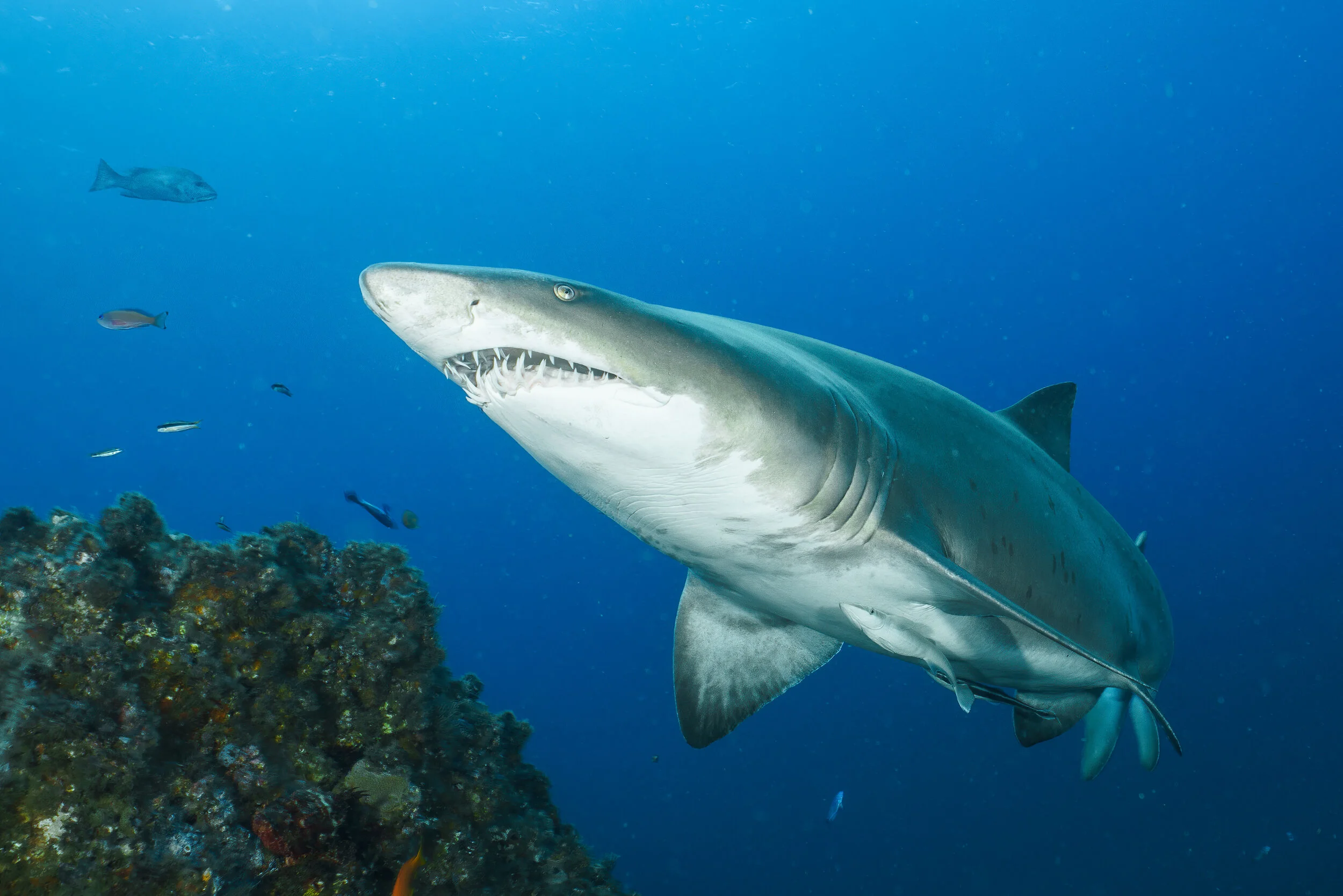
Julian Rocks has been fully protected from fishing since 2006 as part of the Cape Byron Marine Park. An underwater video study documented “a significant increase in sightings of grey nurse sharks at Julian Rocks between 2006 and 2012.” Grey nurse sharks are critically endangered on Australia’s east coast.
“Counts of other shark and ray species also approximately doubled inside the sanctuary, relative to nearby reefs where fishing is allowed, over that period.”
The author notes: “the shark abundance at Julian Rocks is the highest I’ve ever seen in temperate waters. In fact, it’s the highest density of sharks I’ve seen anywhere in the world outside the famed shark hotspots in the Galápagos Islands and in Tubbataha Reefs in the Philippines.”
During a single 50-minute dive, the author counted “up to 50 wobbegong sharks, as well as several leopard sharks, a grey nurse shark, bronze whalers, and multiple species of rays.”
Shark species present include:
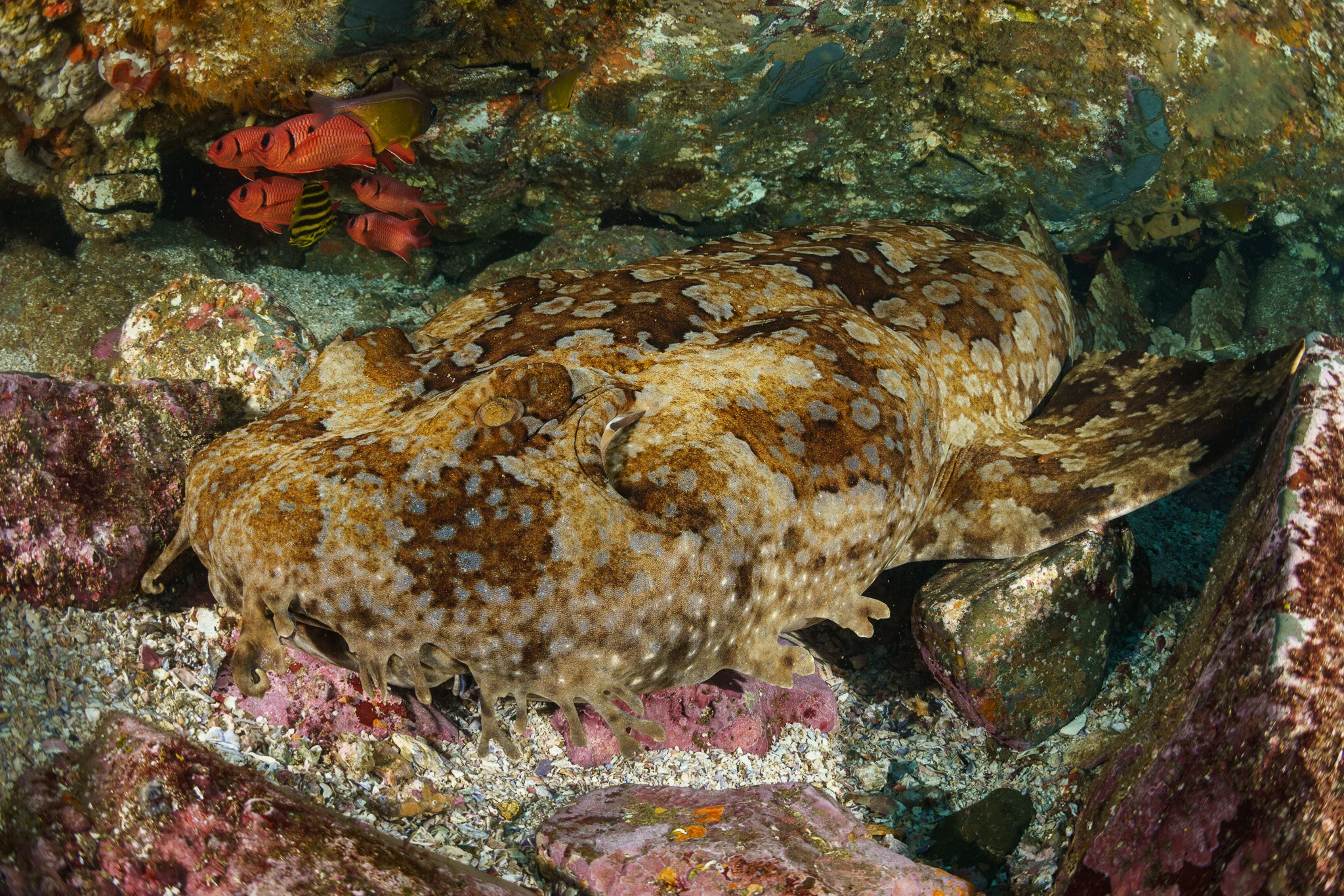
- Wobbegongs (three species: banded, spotted, and ornate)
- Grey nurse sharks (sandtigers)
- Leopard sharks (zebra sharks)
- Bronze whalers
- Colclough’s shark (rare)
- Multiple ray species
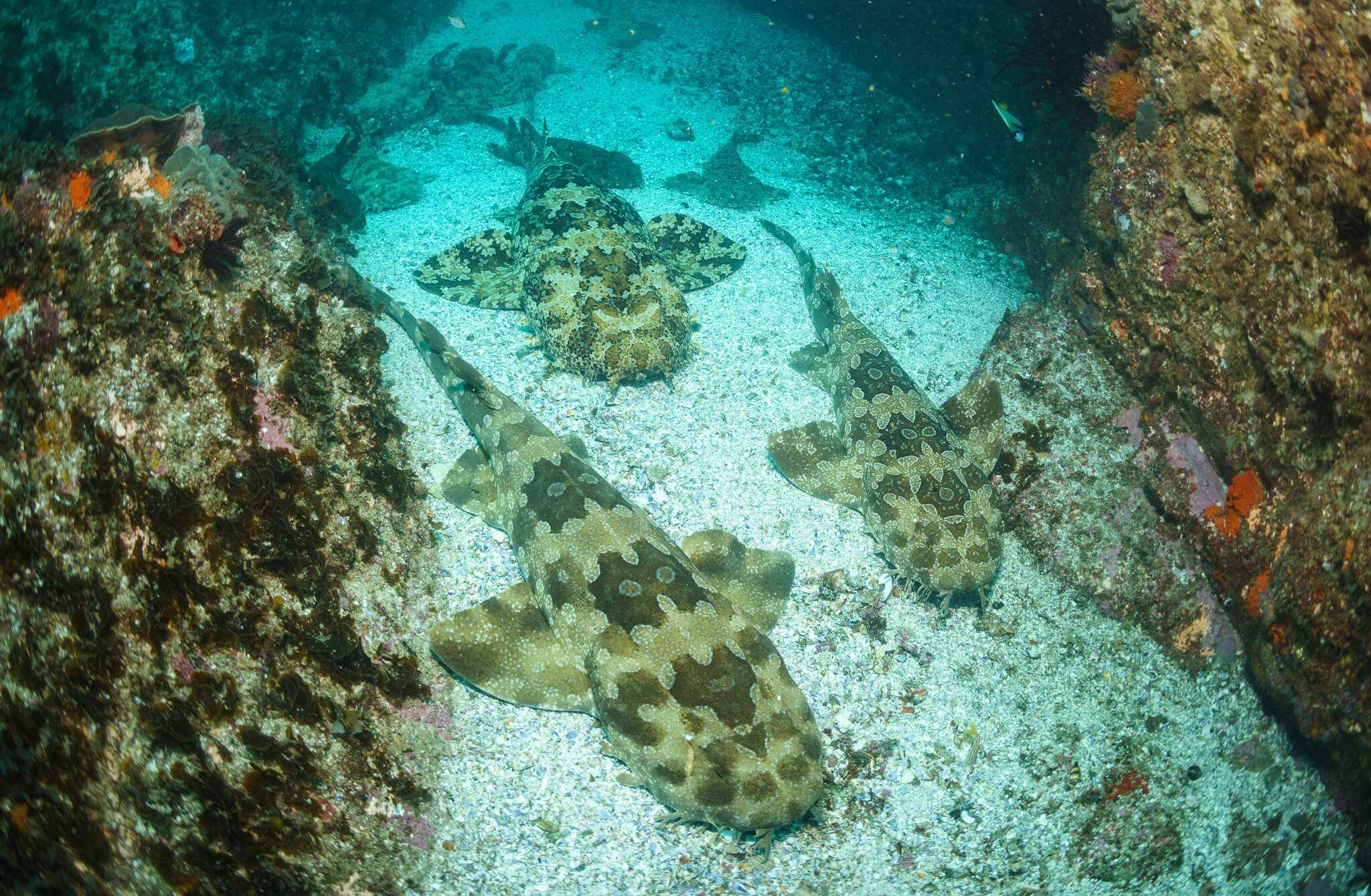
Diving at Julian Rocks in Byron Bay
Operator: Sundive dive and snorkeling center, owned by shark scientist Dr. David Robinson and photographer Simone Caprodossi.
Dive characteristics:
- Single-tank dive, 10 minutes from shore
- Descend via mooring buoy at own pace
- Maximum six divers per guide
- Most action shallower than 18 meters
- Can experience current on northern side (Cod Hole)—boat picks up divers after drift dive
- No bait used; sharks are naturally present and relaxed
Water temperature: 18–21°C (wear hooded vest and warm rash shirt)
Visibility: Highly variable; late summer (February/March) offers best visibility (20m+) and warm water; mid-winter features largest grey nurse shark numbers plus migrating humpback whale sounds.
Certifications available:
- Discover Scuba (pool lesson + rocks dive)
- Open Water
- Advanced/Adventure dives
- Full certification courses
Snorkeling: Regular guided snorkeling trips available; family-friendly option.
Gear rental: Full equipment rental available at Sundive.
Not a diver? No worries!
The site welcomes snorkelers and new divers. Discover Scuba options allow quick pool training before rocks diving. Snorkeling trips are guided and highly recommended for families.
Byron Bay Accommodation
Central Byron Bay has numerous well-reviewed accommodation options near Sundive. Alternative stay locations include Arakwal National Park (wildlife photography area with wallabies).
Search Byron Bay accommodations on Booking.com
Travel Insurance Note
“Don’t forget to purchase travel insurance!” The site recommends World Nomads for scuba diving, snorkeling, hiking, and adventure travel coverage.
Underwater Photography Notes for Julian Rocks
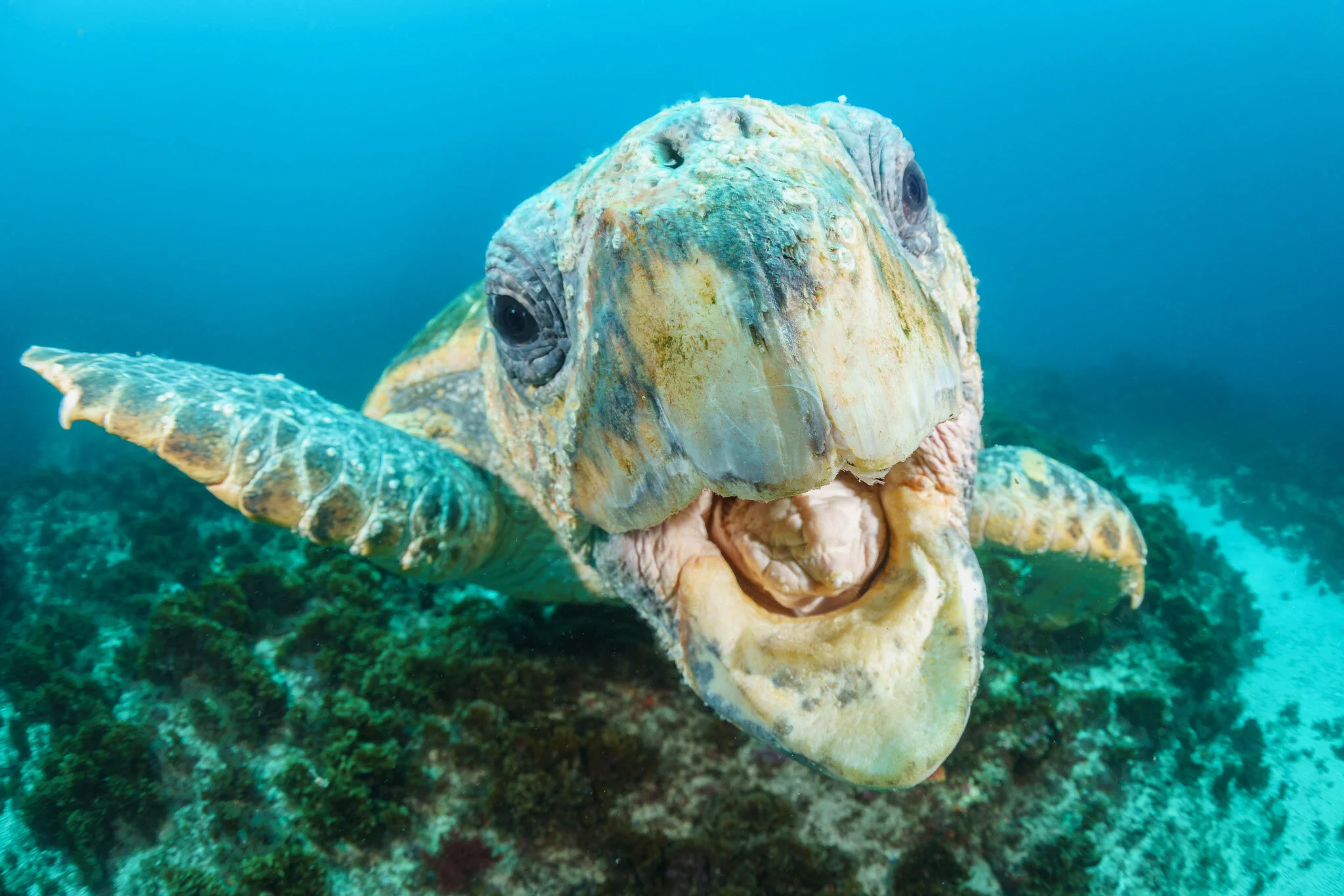
Author’s equipment:
- Sony A7rIII camera in Nauticam NA-A7RIII housing
- Canon 8-15mm fisheye lens (via Metabones V adapter)
- Dual YS-D2 strobes
See underwater wide-angle photography settings article for detailed setup information.
Lens recommendations: Fisheye works well for leopard sharks and wobbegongs (close-focus subjects); rectilinear wide-angle (like Canon 14mm) better for grey nurse (typically further away).
Learning resource: Underwater Photography Masterclass by Alex Mustard
Related Articles
- Whale Sharks in the Galapagos Islands: A Guide for Divers
- The Thresher Sharks of Malapascua Island, Philippines
- Scuba Diving Galapagos on the Humboldt Explorer
Navigation
Previous: Wildlife Watching in Arakwal National Park, Byron Bay Next: Bloodsucking Birds! The Vampire Finches of Wolf Island, Galapagos
Tags
Sharks, Shark Diving, Diving Julian Rocks, Diving Byron Bay, Leopard Sharks, Wobbegong Sharks, Grey Nurse Sharks, Images of Sharks, Scuba Diving, Photography Tips, Fisheye Photography
Footer Links
Who we are | In the Media | Contact
Best Snorkel Gear 2025 | Kids Snorkel Sets
Best Dive Gear 2025 | Best Dive Computers
Waterlust Whale Shark Collection
Privacy | Affiliate Disclaimer | Site Map
Copyright Nature Tripper 2025