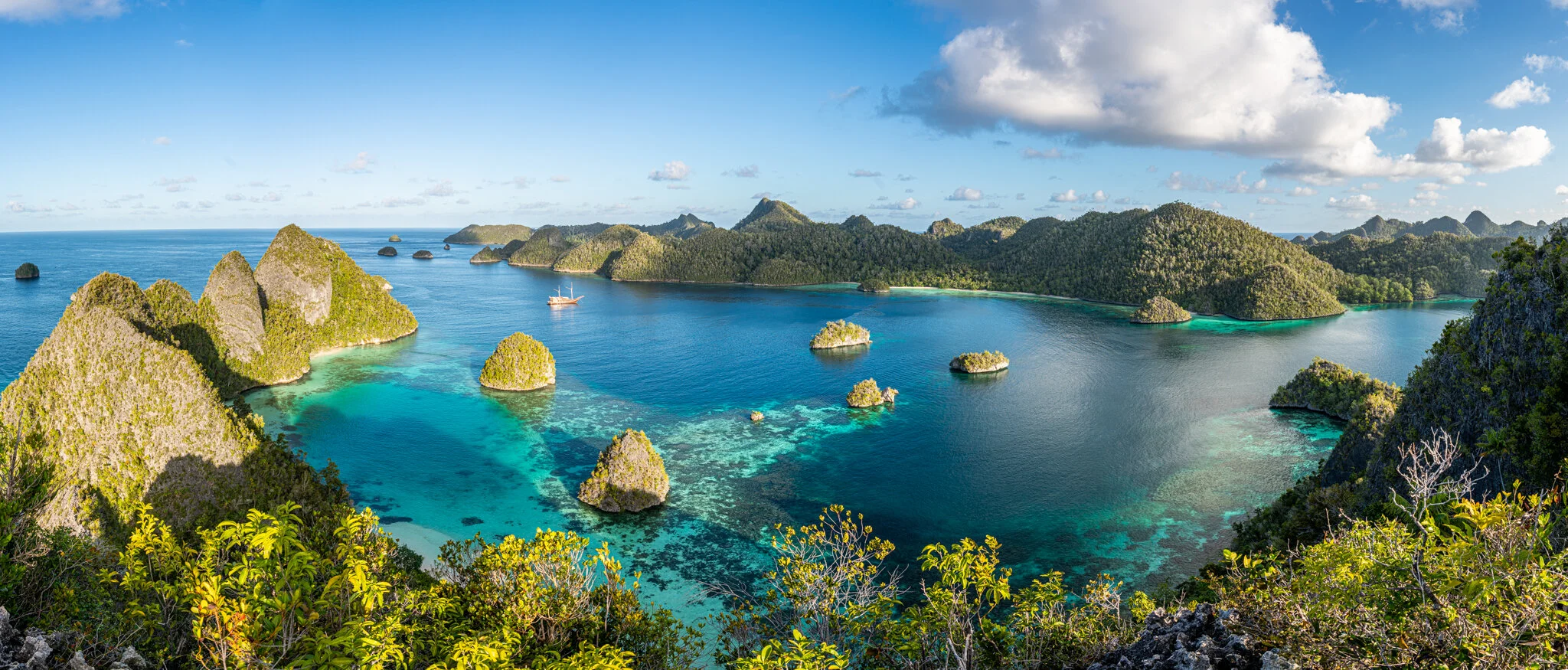
Diving Raja Ampat – A Marine Biologist's Guide to the best Diving Experience in the Coral Triangle
This guide is written by Elitza & Simon, both experienced marine biologists with local knowledge of Raja Ampat.
Dr. Elitza Germanov is a Senior Scientist at the Marine Megafauna Foundation, where she works on the research and conservation of Indonesian manta rays. She is also a Dive Instructor and liveaboard marketing and booking manager in Indonesia. About Elitza.
Dr. Simon J. Pierce is a co-founder of the Marine Megafauna Foundation, where he leads the global whale shark research program, and an award-winning marine wildlife photographer. About Simon.
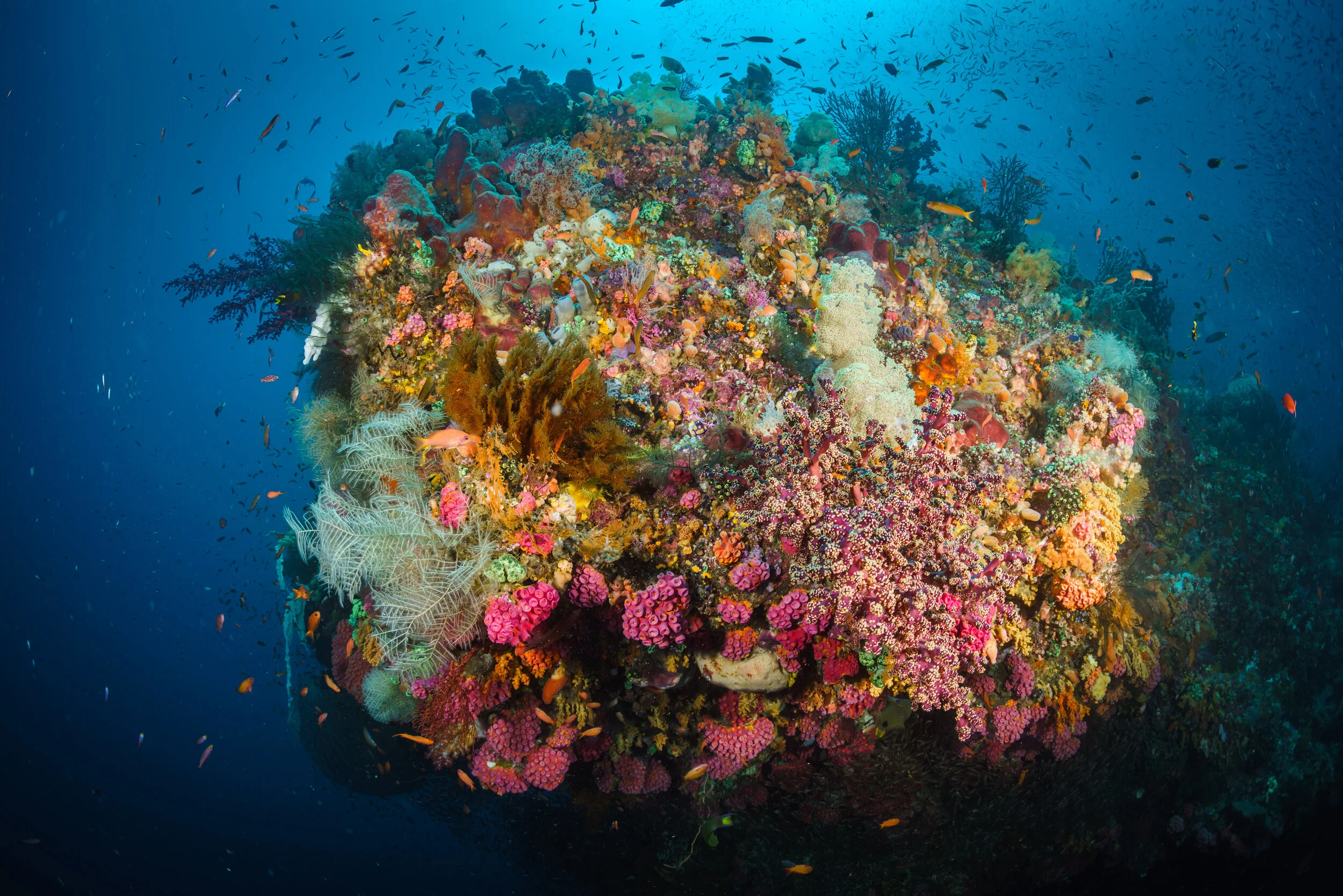
A dive trip to Raja Ampat is on every “world’s best” list for good reason. The epicenter of the world’s marine biodiversity, this group of over 1,500 islands and five Marine Protected Areas in eastern Indonesia boasts over 550 species of corals, including three-quarters of the world’s hard corals and more than half of all soft corals.
There are over 1,400 reef fish species, 27 marine mammals, six of the seven sea turtle species, and eleventy billion invertebrates (okay, we stopped counting).
Planning a dive trip to Raja Ampat can be overwhelming – particularly if you haven’t been to the region before. We’ve created this insider’s guide to help you know when to visit, where the best dive sites are, and to decide whether a dive liveaboard or resort-based trip is the best option for you.
So, let’s dive in :)
What you need to know about diving in Raja Ampat
Best Season: October – April is the best time to see manta rays, especially in February and March, and has the best weather overall. Many liveaboard operations move to other regions of Indonesia outside these months.
Underwater visibility: 10–30 m (30–100 ft). Misool, in the south, generally has the best visibility (+20 m).
Temperature: 28–30ºC underwater, with 25–31ºC air temperature during the day. Nice.
Dive depths: 5–40 m. Your dive guides will be able to cater to different experience and certification levels.
Currents: 0–Strong. There are some fun drift dives with huge fish schools, pelagic predators, and all kinds of good stuff. There are plenty of other options if you prefer to avoid currents.
Certification level: Open Water to Advanced. Preferably Advanced, as some of the best dives do have current. Having good buoyancy skills also protects these stunning coral reefs.
Is it better to dive Raja Ampat by Liveaboard, or Resort?
We’ve dived extensively with both Dive Resorts and liveaboard dive holidays are genuinely good options at Raja Ampat.
After experiencing both the pro’s and con’s become clear, and some may surprise you:
PRO TIP: You can dive many of the same sites in the south (Misool) and central (Dampier Strait) regions of Raja Ampat from either dive resorts or liveaboards. A longer liveaboard trip is an amazing way to see all the region’s dive highlights.
LIVEABOARDS
Advantages of Diving Raja Ampat on a Liveaboard
- Liveaboards typically allow for more dives – ‘eat, sleep, dive’ – and the convenience of short rides to and from ‘home’.
- Liveaboards tend to be more expensive upfront than resorts, but have more inclusions (often all dives, meals, and non-alcoholic drinks). Liveaboards range from shorter, budget options to longer luxury trips that travel through more of the region.
- Liveaboards are a great way to explore all of the remote highlights in Raja Ampat.
- Liveaboard operators generally offer easy and convenient airport and hotel pick-ups and drop-offs from the regional hub of Sorong.
Things to consider
- You will be either diving, eating, or sleeping. If you love to balance diving with beach time, better to go with a resort.
- Usually no cultural or land based activities - this is a dive-focused trip.
Note: many liveaboards move to other areas in Indonesia outside the ‘Raja Ampat season’ between November and April.
Typical Dive Schedule for a Liveaboard
You’ll wake up at dawn for your first dive, returning to a full buffet breakfast before heading out for a mid morning dive, then you’ll eat lunch, before heading off again for an afternoon dive. You’ll have time for showers and sundowners… or a night dive! While schedules vary day to day, here’s what you can expect:
- 6:00am Wake up, coffee or tea, toast.
- 6:30am Morning dive *
- 8:30am Full buffet breakfast.
- 10:00am Mid-morning dive
- 12:00 Lunch
- 1:30pm Afternoon Dive
- 3:30 Afternoon Tea, Showers, Rest.
- 5pm Night Dive (optional) or Sundowners
- 7pm Dinner
- 9pm Bed
* Keep in mind each “Dive” is around 2 hours: 30mins to gear up / listen to dive briefing / get into boats / scoot out to dive site, then 45-60min dive time, and 15 mins to return and take off your dive equipment.
Our Top 3 Raja Ampat Liveaboards are:
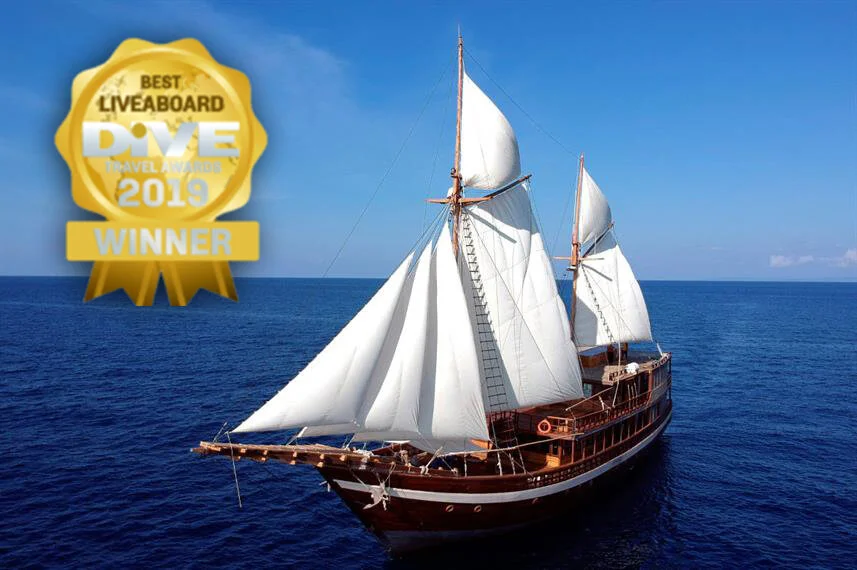
Voted “World’s Best Liveaboard” in 2019. We use the Coralia ourselves for the Marine Megafauna Foundation’s expeditions.
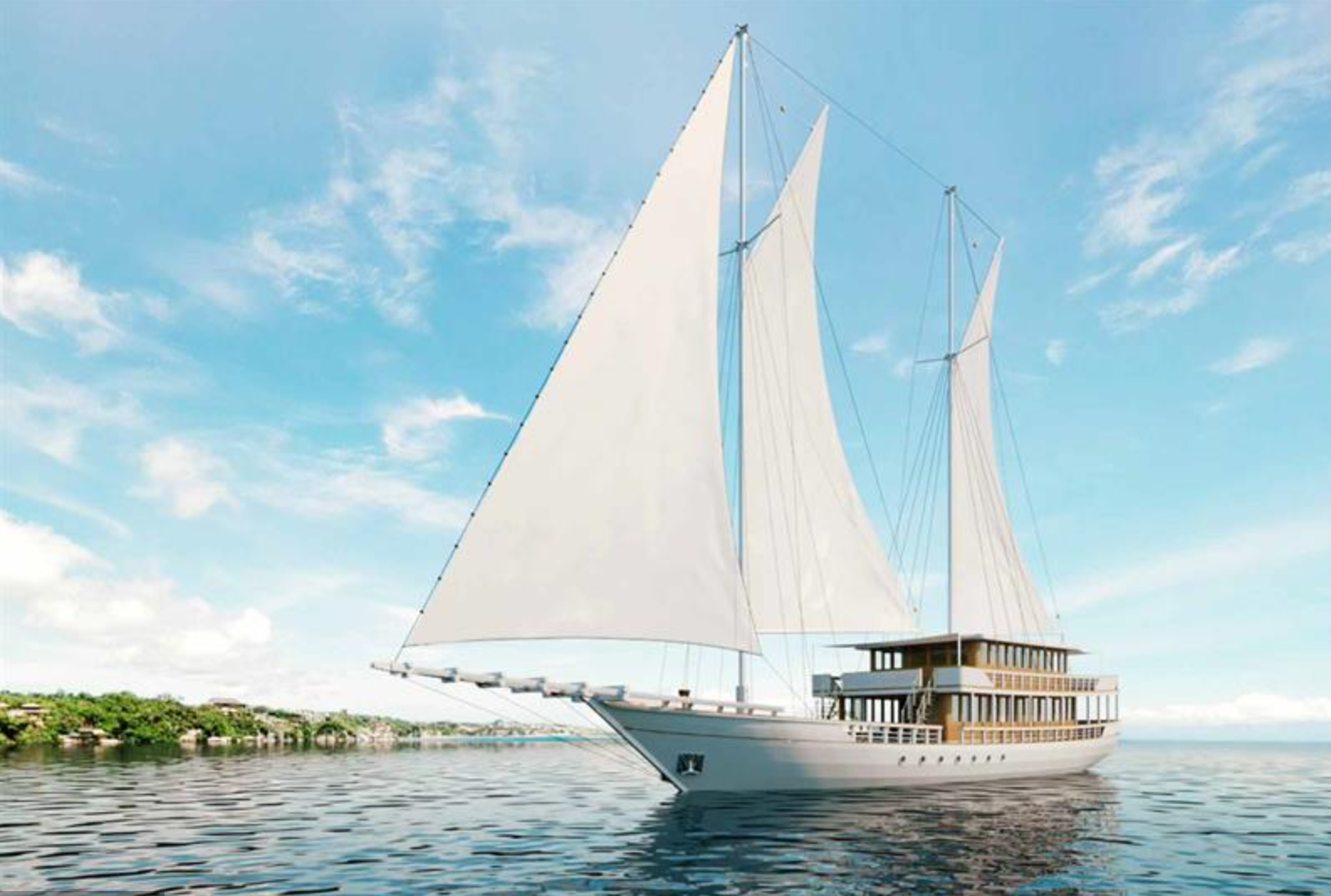
New in 2019, the Fenides offers exclusive trips for a smaller number of passengers on this modern luxury vessel.
Renovated in 2018, the Solitude’s twin-hull configuration provides plenty of space, including an excellent photography room.
BROWSE MORE RAJA AMPAT LIVEABOARDS
RAJA AMPAT DIVE RESORTS
Advantages of Diving Raja Ampat through Dive Resorts
- Resorts allow you to set your own scuba schedule, and your accommodation will usually be larger.
- Dive resorts are the best way to explore their area in-depth, and many have gorgeous ‘house reefs’ too.
- For those seeking to learn more about local culture, land-based trips allow you to form deeper connections with your hosts, especially if a village is nearby.
- Misool Eco Lodge in southern Raja Ampat is an excellent, luxurious way to explore the amazing Misool dive sites in depth, though it’s a long transfer from the airport at Sorong.
- There are several good dive resorts in the central Dampier Strait region, and more budget options in this area. Birds of Paradise are another attraction here.
- More wind and rain in the ‘off season’ means Dampier Strait dive resorts may be a better option than liveaboards between May and October, although there might be some good deals available for both.
Our Top 3 Dive Resorts in Raja Ampat are:

Situated in Dampier Strait with close access to dozens of incredible dive sites including some of the best Manta cleaning stations in Raja Ampat - Manta Point and Blue Magic. Supporters of the Marine Megafauna Foundation’s manta research programs.
An eco-friendly dive resort located close to Cape Kri’s dive sites, with rustic bungalows nestled amongst lush rainforest.
The legendary Misool Eco Resort provides guests with exclusive access to the ever-famous dive sites in the Misool region.
BROWSE MORE RAJA AMPAT RESORTS
Where can I dive in Raja Ampat?
In this next section, we’ll take you through the 3 major areas you’ll explore in Raja Ampat.
1. The Dampier Strait
The Dampier Strait and surrounding areas in central Raja Ampat are well-serviced by both dive resorts and liveaboards that operate or transfer from the regional hub of Sorong. Shorter liveaboard itineraries (i.e. less than a week) will focus on this area.
2. Wayag and northern Raja Ampat
Wayag and northern Raja Ampat are best visited by liveaboards. The highlights here are the stunning views over the Wayag lagoon system and some excellent dive sites as you make your way north. Liveaboard trips exceeding a week may visit this region along with the Dampier Strait.
3. Misool
Misool in the south of Raja Ampat is visited by liveaboards on longer (+7 day) trips or from the famed Misool Eco Resort following a long transfer from Sorong.
PRO TIP: You can dive all of these areas in a single extended liveaboard trip (12 days or more), which we highly recommend! Alternatively, you could combine a stay at a central resort, such as Papua Explorers, with a second stay at Misool Eco Resort.
Diving the Dampier Strait in Raja Ampat
Many of the best dive sites in Raja Ampat aren’t far from the airport at Sorong. Central Raja Ampat includes the fish-filled corners of Dampier Strait, with thrilling currents on offer if you choose, manta ray cleaning stations, the macro diving in Batanta, and the iconic karst islands of Penemu. The main sites can be visited on a shorter liveaboard itinerary, or choose a dive resort located near a great dive site so you can explore that area in depth.
Key points
- The best time of year is from November to April, but you can dive here year-round. There can be some great ‘off-season’ discounts.
- Accessed via the regional airport at Sorong. You’ll be picked up by your operator for transfer to the vessel or resort.
- Marine highlights include manta ray cleaning stations, pelagic mayhem at Cape Kri, vast hard coral gardens in the Fam Islands, and excellent muck diving at Batanta.
- Top dive sites include Cape Kri for pelagic fish in currents, Manta Sandy, Manta Ridge, and Blue Magic for manta rays, and Batanta for muck critters. Melissa’s Garden is famed for its corals.
- Liveaboard and land-based resorts dive the same main sites in this region.
Diving Dampier Strait, Raja Ampat
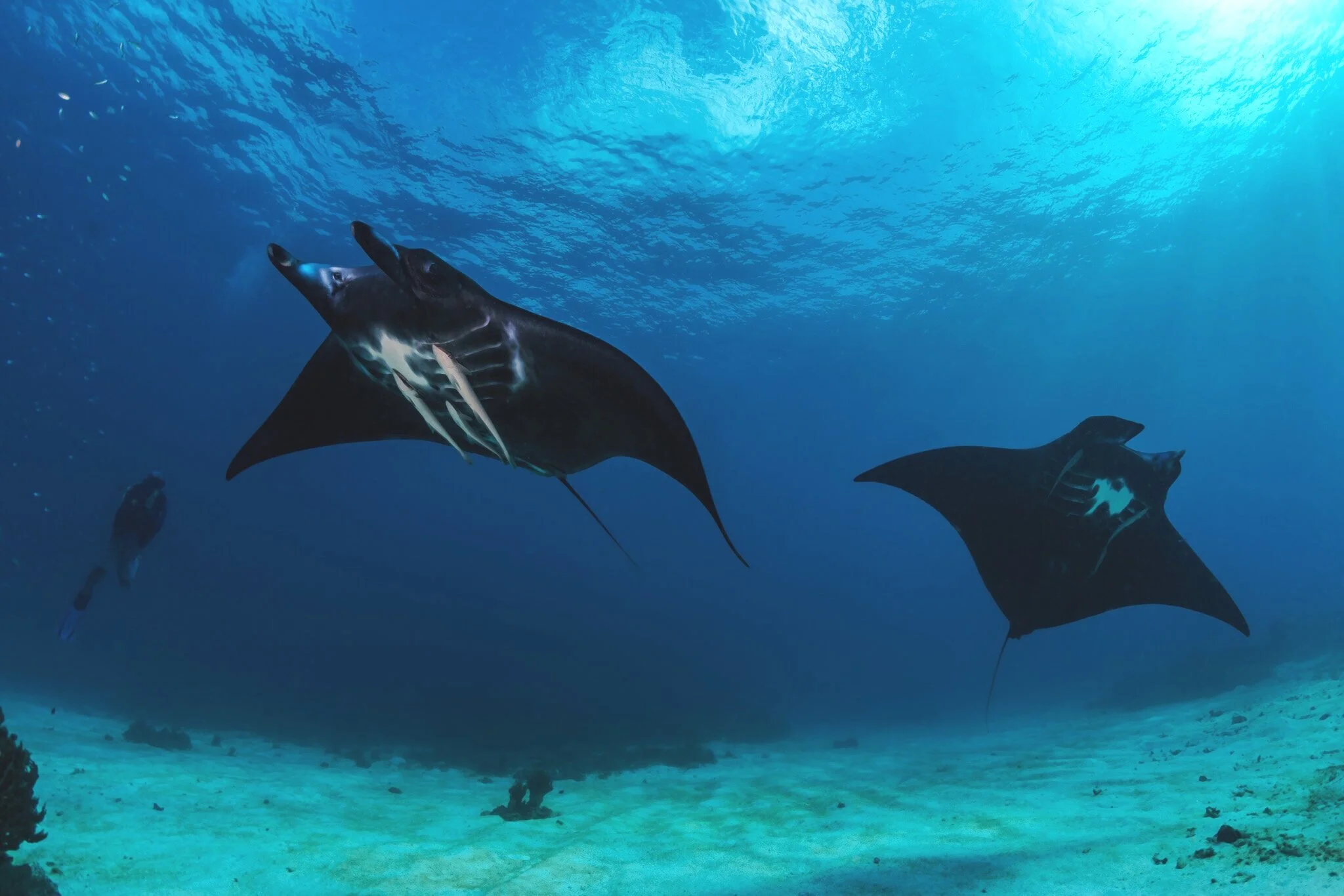
Some of our favorite dives here include Cape Kri, Sardine, Mioskon, Chicken Reef, Citrus Ridge, and Mayhem, in which current-loving fish mix (sometimes terminally) with predatory tuna, Spanish mackerel, barracuda, and reef sharks. More leisurely dives on colorful reefs swarming with life lie just below the surface. If mantas are on your wish list – we approve – then several of the best-known reef manta cleaning stations, including Manta Sandy and Manta Ridge are in this area, as well as Blue Magic which is visited by giant (oceanic) mantas in the first few months of the year.
The nutrient-rich environment and detritus off the island of Batanta is ideal habitat for camouflaged critters. Macro enthusiasts and photographers will be in rapture with the diversity of nudibranchs, cephalopods, including flamboyant cuttlefish, blue ring octopus, shrimps and crabs, pipefish, and rare scorpionfish. Sunrise and sunsets in this area are greeted by spectacular (and, erm, noisy) flocks of crested cockatoos and Blyth’s hornbills.
You won’t want to miss out on a panoramic view of the iconic karst islands, both for their innate beauty and instant jealousy-inducing potential for your friends at home. Penemu in the Fam islands is, conveniently, near some gorgeous reefs including the famous Melissa’s Garden. For the early birds, both literally and figuratively, this itinerary can also provide opportunities to see the red birds of paradise that are native to Waigeo, Gam, and Batanta.
Best Dampier Strait Liveaboards
All of our favorite liveaboards visit this region. Click through below to view their available dates and itinerary options:
Best Dampier Strait Dive Resorts
Raja 4 Divers (~$300 per night) is located on the private island, Pulau Pef, close to several popular dive sites including the Passage, Citrus Ridge, and Mayhem. They also visit the Dampier Strait sites.
Papua Explorers Dive Resort (~$300 per night) is a personal favorite of ours as it’s located close to some of the most popular manta ray cleaning stations in the Dampier Strait, Manta Point and Blue Magic, as well as the fish schools of Cape Kri. Papua Explorers has previously hosted our organization’s manta ray researchers to help them access these sites.
Sorido Bay ($300 per night) and Kri Eco Resort ($100 per night) are two of the original and most famous Raja Ampat dive resorts, located on Kri Island – just minutes away from the Cape Kri dive site and many other Dampier Strait highlights.
Biodiversity Eco Resort (~$200 per night) is an eco-friendly option located close to Cape Kri.
Diving Northern Raja Ampat
Longer liveaboard trips of more than a week allow for time to explore Dampier Strait, as outlined above, and to add the uninhabited karst islands, pristine beaches, and lagoon system of Wayag. There are some excellent dives on the way there, too. No dive resorts are located in this area at present.
Key points
- The best time of year is from November to April. There are fewer liveaboard options outside this period.
- Accessed via the regional airport at Sorong.
- Marine highlights include the manta ray cleaning stations, coral gardens, and the pelagic extravaganza of the central region, along with more of each, with additional muck diving in Aljui Bay.
- Top dive sites include Cape Kri for pelagic fish in currents, Manta Sandy, Manta Ridge, Blue Magic, and Eagle Rock for manta rays, Batanta and Aljui Bay for muck critters, and Melissa’s Garden and Black Rock for coral-lovers.
- Liveaboards provide the best access to the northern region.
Diving Northern Raja Ampat
As well as the Dampier Strait highlights noted above, a northbound liveaboard journey will take you to the north of Waigeo and the mangrove-fringed Aljui Bay. Fantastic ‘muck’ critter dives can be found here in the bay’s sheltered waters. Continuing northwards through the Bougainville Strait towards the larger Kawe island, manta rays are often spotted at Eagle Rock, and there are some gorgeous black coral reefs brimming with fish in the area, such as Black Rock.
Crossing the equator, the northernmost area of Raja Ampat is the legendary Wayag lagoon. The lagoon itself is breathtaking and worth kayaking or paddling around. You might even be lucky enough to catch a glimpse of some of the juvenile manta rays that use the area as a nursery for the first few years of life. A short, steep climb to Pindito peak will take you to one of Raja Ampat’s, and by extension the world’s best views. The powder-like beaches of this region and the underwater coral gardens at sites like Figure Eight Rock, Far Out Rock, and Magic Rock are an excellent bonus.
Diving Misool, Raja Ampat
Misool offers world-class diving amongst beautiful karst islands, and typically the best underwater visibility in the region. If your sole intention is to dive Misool then you’re best to base yourself at the luxurious Misool Eco Resort, or explore the central region as well on an extended (9+ day) liveaboard dive expedition.
Key points
- The best time of year is from November to April.
- Accessed via the regional airport at Sorong. Liveaboards leave from Sorong, while Misool Eco Resort will require a long boat transfer.
- Marine highlights include pygmy seahorses, manta ray cleaning stations, hard and soft coral gardens, giant sea fans and pelagic fish schools. There’s a good chance of seeing some ‘walking sharks’ too.
- Top dive sites include the above-listed central sites, and so many sites around Misool that you should just read the full description below. Magic Mountain / Shadow Reef provides a good chance of seeing giant manta rays.
- A liveaboard trip or a land-based stay at Misool Eco Resort is the best way to explore Misool.
Best Resort to explore Misool
The legendary Misool Eco Resort is a naturalist’s dream with ambitious goals to reduce its carbon footprint. Set over the shallow lagoon teaming with juvenile blacktip reef sharks, amidst a lush jungle backdrop on the small private island, the resort has all the castaway feels with extraordinary luxury for a place so remote.
The real beauty of this resort is its mission to turn back time on an extremely productive area that was seeing the pressure of shark and other unsustainable fishing practices by coming to agreements with local landowners and resource users to create an expansive >1220 km2 marine no-take zone that is now patrolled by stakeholders. The resort has set up its own charitable foundation the Misool Basefin Foundation, which helps fund management, patrolling and other conservation work.
Diving Misool, Raja Ampat
Misool’s clear-water reefs are dominated by soft corals, which go right to the surface around some islands.
Moving south, your main destinations are likely to be the northward Wagmab, Farondi and Balbulol, the far east Daram Islands, central south Fiabacet and Boo, and westward Wayilbatan. Longer itineraries might take you westward to Jef Pele where the Four Kings and the aptly-named Kaleidoscope, Toblerone, and (Pele’s) Playground are a feast for the eyes and a delight for the soul. The caves around Farondi are stunning, and are frequented by hunting mobula rays, while Three Rocks/ Sisters offer a thrilling drift through a large swim-through.
The colourful sea fan forests at Andiamo, Warna Bewarna and The Candy Store – to name a few – around Daram are tough to rival. Boo Window, Neptune’s Seafan and the famous Magic Mountain/ Shadow Reef are your best bets of spotting manta rays, of which both reefs and giants might be seen at different sites.
Thanks to the management initiatives set up by the Misool Eco Resort you’ll spot plenty of reef sharks and pelagic fish in and around Misool. Photographers will be torn as to whether they should bring their macro lens to capture special color variations of the “Santa” pygmy seahorse, or the wide-angle for the fish mobs, megafauna and stunning colorful reefs. Good luck – the FOMO is real.
RAJA AMPAT TRAVEL INFORMATION
How do I get to Raja Ampat?
Bali is a dive destination in its own right (we highly recommend Nusa Lembongan and Tulamben), so many people choose to fly through here.
Getting to Raja Ampat from Bali requires a couple more flights. Internal flights to Sorong connect through Jakarta, Surabaya, Makassar, and Manado. Garuda Airlines is normally a good option for domestic flights, involving a midnight flight from Jakarta arriving at 6:30 am in Sorong.
If you’re not booked through to Sorong, you can expect to pay excess baggage fees. The most cost-effective option is often to book well in advance and get a business-class fare, which isn’t much different in price from economy plus baggage costs.
Where do I stay in Sorong?
The Swiss Belhotel Sorong is the best option, and should include breakfast. They’re pretty helpful with early check-ins for arrivals in the early morning. All of the liveaboards and dive resorts are likely to be able to transfer you to and from this hotel.
What Fees are required to dive Raja Ampat?
Visitors to Raja Ampat are required to contribute to the region’s management and conservation initiatives through purchasing a marine tag. This costs IDR 1,000,000 (~$USD 70; EUR 59; AUD 94; GBP 52), and is valid for one year from the purchase date.
These fees are used to maintain Raja Ampat’s protected areas, including patrol activities, and to support local conservation and development efforts. They help to provide communities with schools and health care, among other useful things.
What health & safety considerations are there when diving Raja Ampat?
West Papua is the most remote of Indonesia’s provinces, and health services are not available to the same standard as in larger Indonesian cities. There is currently no recompression chamber near Raja Ampat. Most dive operators will require you to have personal dive insurance. Our preferred travel insurance provider is World Nomads, which also covers recreational diving, while DAN specialist dive insurance is also a great option.
The best strategy here is to maintain safe dive practices and staying well within no-decompression limits. Take a good dive computer with you, even if you’re hiring bulkier gear.
Many dive resorts and liveaboards will offer (and recommend) Nitrox use. This will often allow for safer dive profiles, and we also recommend taking this option.
Malaria is prevalent on the mainland of Raja Ampat, and may also be present in coastal areas near or among larger communities. All land-based resorts equip their rooms with mosquito nets, and you are advised to wear light-colored clothing with long sleeves in addition to wearing mosquito repellent at the prime mosquito biting hours around dawn and dusk.
Related Articles
- Best Dive BCDs for 2025
- Best Dive Computers for 2025
- Best Scuba Regulator for 2025
- Shearwater Showdown: Teric, Peregrine & Perdix Dive Computers Compared
- Best Mask for Diving in 2025
- Best Fins for Diving in 2025
Footer Links
Best Dive Gear: Best Dive Mask | Best Dive Fins | Best Dive Regulator | Best Dive Computers | Best Dive BCDs | Best Full-Face Dive Mask
Best Snorkel Gear: Overview | Mask | Fins | Kids Sets | Full-Face Mask | Prescription Mask
Explore: Ocean Travel | Underwater Photography
About: Who We Are | Dr. Simon J Pierce | In the Media | Scientific Publications | Image Licensing
Shop: Waterlust Whale Shark Collection - 10% of profits support Marine Megafauna Foundation whale shark conservation
Privacy | Affiliate Disclaimer | Site Map
Copyright Nature Tripper 2025