
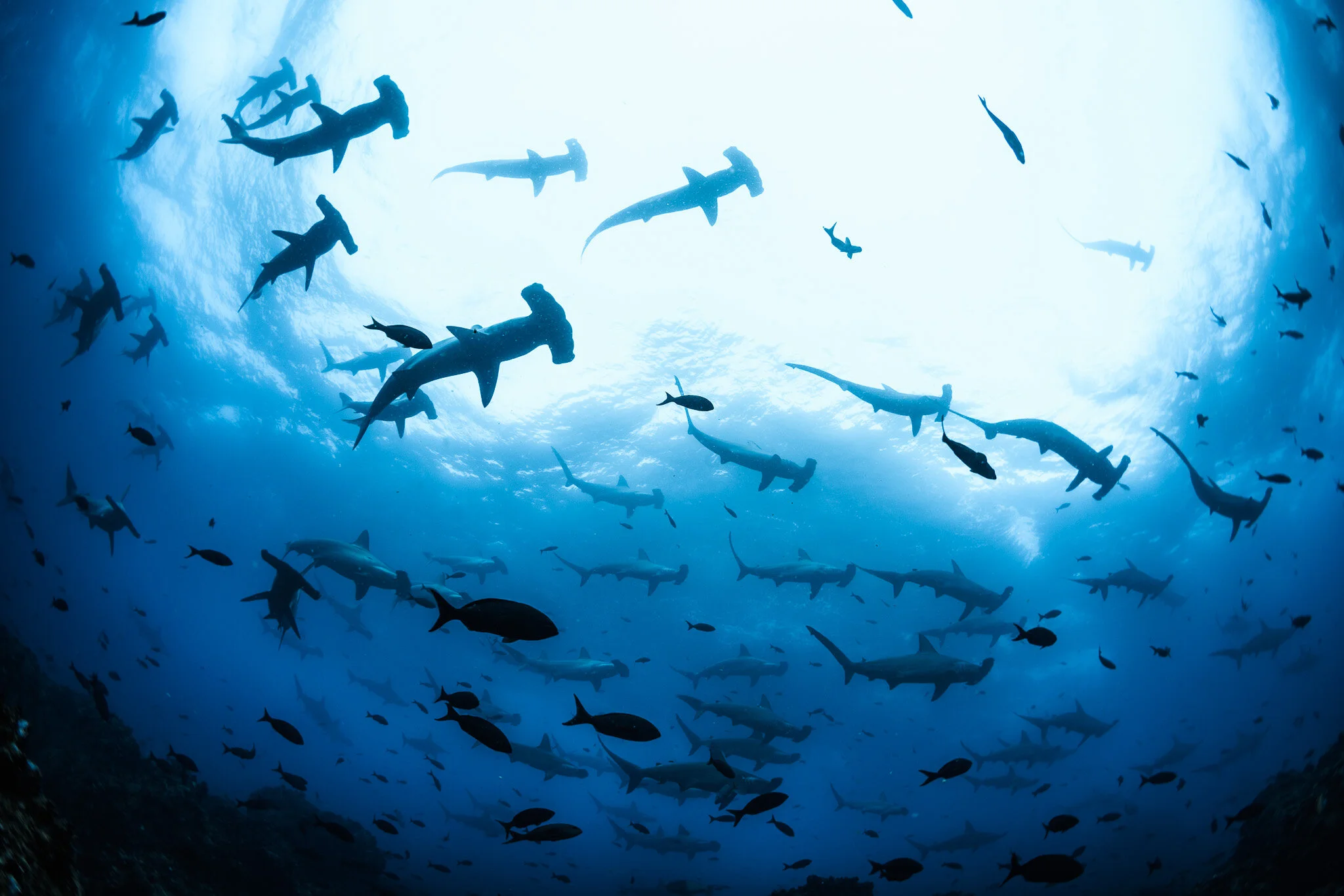
The Galápagos Islands offer diving experiences unlike anywhere else on Earth. Schools of hundreds of hammerhead sharks, whale shark encounters, marine iguanas feeding underwater, and endemic species found nowhere else.
I’ve been leading whale shark research expeditions to the Galápagos since 2011. This remote archipelago is challenging but incredibly rewarding.
Top Destinations
Diving Galápagos on the Humboldt Explorer
Our detailed guide to liveaboard diving at Darwin and Wolf—the legendary northern islands where you’ll encounter schooling hammerheads and whale sharks.
Best for: Advanced divers, underwater photographers, bucket-list seekers.
Planning Your Trip
Best Time to Visit
- Whale sharks: June–November (cold season, when pregnant females appear)
- Hammerheads: Year-round, but best June–November
- Calmest conditions: January–May (warm season)
Experience Required
Galápagos diving is for experienced divers. Strong currents, cold water (16-24°C), and challenging conditions are the norm at Darwin and Wolf. Most operators require:
- Advanced Open Water certification
- Minimum 50-100 logged dives
- Recent diving experience
Liveaboard is Essential
To reach Darwin and Wolf, you need a liveaboard. Day boats from Santa Cruz only access the central islands. We recommend 7+ night itineraries that include multiple days at the northern islands.
Related Guides
- Best Dive Computers — Essential for the challenging conditions
- Whale Sharks in the Galápagos
- Vampire Finches of Wolf Island